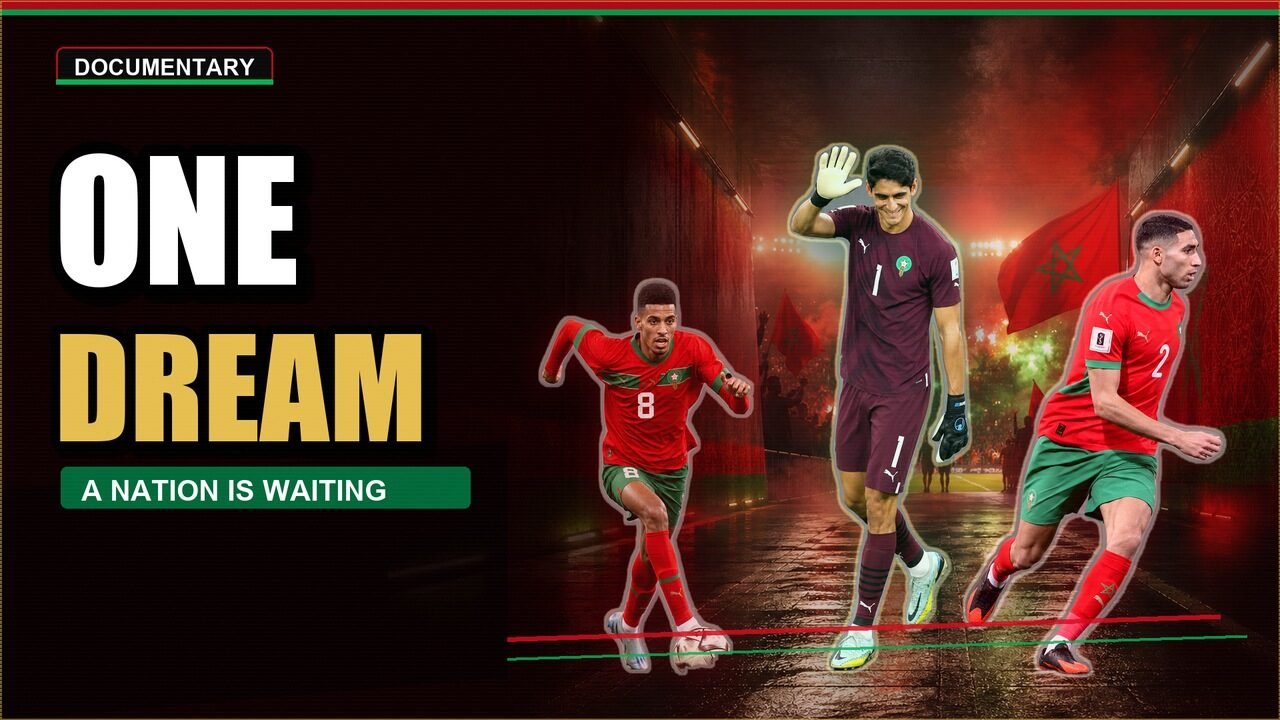
Morocco 2026 Documentary: The Dream That Refuses to Wake
Morocco 2026 is more than a squad presentation. It is a national story about memory, injury, leadership, youth, and the belief that 2022 opened a door that this generation still wants to walk through.
Coach profile: Mohamed Ouahbi.
Documentary structure
The video opens with Morocco as a collective dream, then pays respect to Abde Ezzalzouli and Nayef Aguerd before moving through the coach, the captain, the spine of the team, the young wave, the late replacements, and the reserve goalkeepers.
Featured profiles from the film
Full narrator script
There are dreams that belong to one person.
And then there are dreams that live inside a whole country.
In Morocco, football is not only a game. It is a language spoken in streets, in cafes, in mountain villages, in coastal cities, and in the homes of millions who have carried the same hope for generations.
The dream is simple to say, but almost impossible to carry:
to see Morocco go further, stand taller, and rewrite history once again.
In 2022, the Atlas Lions made the world stop and look. They turned belief into noise, noise into pressure, and pressure into history.
Now, in 2026, a new chapter begins.
But before we meet the team that will chase the dream, we begin with respect.
Because every squad has its heroes.
And sometimes, the first heroes of a World Cup story are the players who are forced to leave it before the first whistle.
Morocco 2026.
The Dream That Refuses To Wake.
This is not just a squad presentation.
This is the story of a nation that has already touched history, and now wants to hold it.
Abde Ezzalzouli was supposed to be part of this journey.
The winger who plays with rhythm, courage, and directness. The kind of player who does not need permission to attack. He takes the ball, faces the defender, and asks the question that every crowd loves:
can you stop me?
But football can be cruel. Injury took him away from the World Cup stage, and Morocco lost a player capable of changing the mood of a match with one run.
This is more than a name missing from a list. It is a dream interrupted.
For Abde, this chapter hurts.
For Morocco, it becomes motivation.
And then, Nayef Aguerd.
A defender with elegance, timing, and the calm authority of a player who understands danger before it becomes visible.
Aguerd has given Morocco balance. He has been part of the line that made stronger teams uncomfortable, the line that told the world Morocco could defend with pride and attack with courage.
But injury also took him away.
No player wants to miss the World Cup. No defender wants to watch from outside when his country is asking for one more battle.
So before the new story begins, Morocco salutes him.
Because even absent, his place in the journey remains.
At the center of this new chapter stands Mohamed Ouahbi.
He is not only a coach. He is a builder of players, a teacher of details, and a man shaped by two football worlds: Belgium's academy culture and Morocco's emotional fire.
Ouahbi's strength is development. He understands young talent. He understands the Moroccan diaspora. He understands that a national team is not built only with tactics, but with trust.
His challenge is enormous.
He must take a squad full of speed, pride, and expectation, and turn it into one heartbeat.
This is the coach who must connect generations.
The established leaders. The rising players. The new names. The old dream.
Every dream needs a face.
For Morocco, that face is Achraf Hakimi.
Captain. Leader. Sprinter. Symbol.
Hakimi is more than a right-back. He is Morocco's accelerator. When the team is under pressure, he offers escape. When the opponent is tired, he becomes punishment.
He carries experience from the biggest stages in Europe. He carries the memory of 2022. And he carries the responsibility of leading a country that believes this generation can do something that once felt impossible.
His strength is speed.
His duty is control.
His mission is leadership.
Behind every brave team, there must be calm.
Yassine Bounou is that calm.
A goalkeeper with reflexes, reach, and a mind built for pressure. In the moments when a stadium becomes too loud, when a penalty area turns into chaos, Bounou gives Morocco something priceless:
time.
Time to breathe. Time to reset. Time to believe again.
He has been part of Morocco's greatest modern memories, and in 2026 he remains the guardian of the dream.
Noussair Mazraoui brings intelligence to the back line.
He can defend wide. He can step inside. He can help Morocco escape pressure with the patience of a midfielder and the responsibility of a defender.
In a team full of emotion, Mazraoui brings calculation.
He reads space. He reads movement. He gives the coach tactical flexibility.
And in a tournament where every detail matters, that flexibility can decide a match.
Chadi Riad represents the modern Moroccan defender.
Tall, composed, and comfortable with the ball, he is not only there to clear danger. He is there to begin attacks.
His role is about maturity.
A young centre-back at a World Cup must learn quickly. Every mistake is louder. Every duel feels heavier.
But Morocco needs defenders who are not afraid of the ball.
Riad gives them that future.
Issa Diop brings size, strength, and presence.
He is the kind of defender who changes the physical temperature of a match. In aerial duels, in body-to-body battles, in the moments when a team needs to suffer, Diop can become a wall.
His challenge is rhythm and concentration.
His value is protection.
In tournament football, not every hero plays with elegance. Some heroes win the ugly minutes.
Diop is built for those minutes.
Then comes youth.
Ayyoub Bouaddi is one of the names that makes the future feel close.
He is young, but he plays with the confidence of someone who wants the ball, not someone who hides from it. His presence in this story is a message:
Morocco is not only trying to repeat history.
Morocco is trying to build the next one.
Bouaddi brings energy, technique, and the courage of youth.
The question is not whether he has talent.
The question is how soon he can turn talent into authority.
Neil El Aynaoui gives Morocco another midfield profile: disciplined, elegant, and competitive.
He can connect the pitch. He can cover ground. He can keep the team balanced when the match begins to stretch.
In a squad full of explosive players, balance is not a luxury.
It is survival.
El Aynaoui's job is to make the beautiful players more dangerous by giving them the structure to breathe.
Azzedine Ounahi is movement.
The kind of midfielder who glides rather than runs, who turns pressure into open grass, who can make a crowded pitch suddenly look spacious.
In 2022, the world discovered him.
In 2026, Morocco needs him to command games, not only surprise them.
Ounahi's gift is rhythm.
His challenge is consistency.
If he controls the middle, Morocco becomes a different team.
Bilal El Khannouss is imagination between the lines.
He sees angles before they open. He plays with the ambition of a number ten and the discipline of a modern midfielder.
For Morocco, he can be the lock-picker.
When opponents defend deep, when the match becomes tight, when speed alone is not enough, players like El Khannouss become essential.
He does not just pass the ball.
He changes the question.
Brahim Diaz brings star quality.
Quick feet. Sharp turns. A left foot that can bend a moment toward danger.
He is the kind of player who makes defenders hesitate. And hesitation, at this level, is enough.
Brahim gives Morocco unpredictability.
He can play wide. He can come inside. He can create the action that breaks a match open.
For Morocco, he is not only a talent.
He is a weapon.
Ismael Saibari gives Morocco power and finesse in the same profile.
He can arrive in the box. He can carry the ball. He can connect midfield to attack with strength and timing.
Saibari is useful because he can change the shape of a match without changing the formation.
He gives the coach options.
And at a World Cup, options are life.
Soufiane Rahimi is emotion in motion.
He plays with hunger, directness, and the feeling that every run could become a memory.
He knows how to attack space. He knows how to live inside decisive moments. And he knows that, for Morocco, one goal can become more than a goal.
It can become a sound.
It can become a street.
It can become a country jumping at the same time.
Gessime Yassine represents another part of Morocco's new wave.
Young, fearless, and built for width, he brings the kind of energy that can disturb tired defenders late in matches.
He does not need to carry the whole story.
He needs to be ready for his moment.
Because World Cups often turn unknown names into permanent memories.
Chemsdine Talbi is speed with a sharp edge.
He brings verticality. He wants to attack. He wants to run at defenders and force them backward.
In a squad with experienced leaders and creative midfielders, Talbi's role is simple but dangerous:
stretch the game, create fear, and make space for others.
Some players control matches.
Some players break them.
Talbi can be one of the breakers.
Ayoub El Kaabi is the finisher's instinct.
He understands where the ball might fall. He understands that strikers live in seconds, not minutes.
Morocco needs creators, runners, and defenders.
But at the end of every beautiful idea, someone must finish.
El Kaabi is in the squad for that final touch.
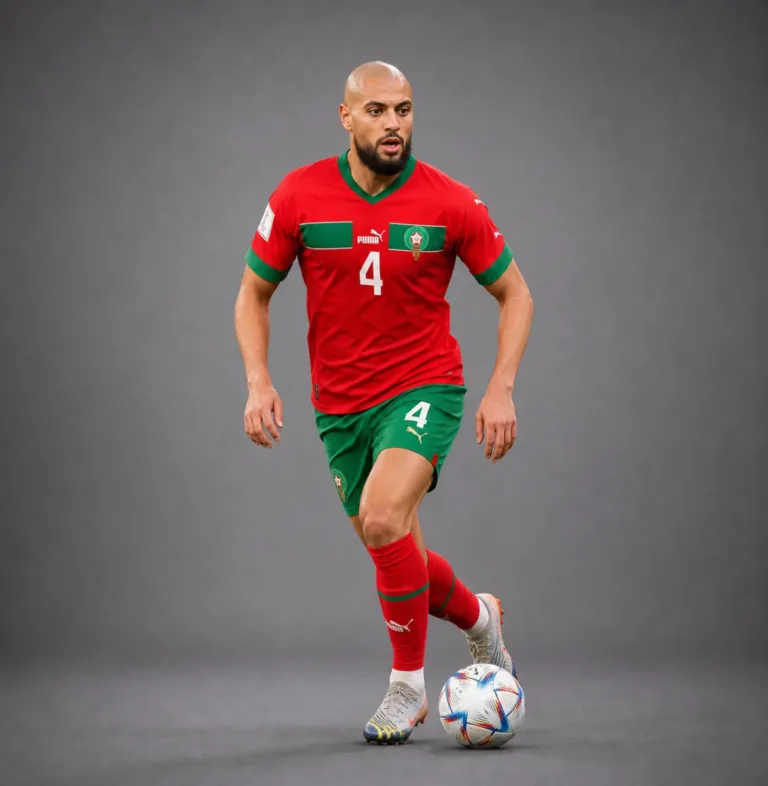
Sofyan Amrabat is steel.
He is the midfielder who gives Morocco resistance, duels, and discipline. When a match becomes heavy, Amrabat accepts the weight.
He protects the defense.
He fights for second balls.
He gives the team a spine.
And every dream needs a spine.
Anass Salah-Eddine offers left-sided mobility.
He can defend, overlap, and help Morocco change tempo on the flank. His value is not only in one spectacular action, but in repeated work:
cover the space, support the winger, recover the position, go again.
Tournament football rewards players who repeat the right actions under pressure.
Salah-Eddine is here for that reliability.
Zakaria El Ouahdi brings athletic energy on the right side.
He can run. He can press. He can carry the ball forward and make the team more aggressive.
In a squad led by Hakimi, every right-sided player must understand intensity.
El Ouahdi gives Morocco another runner, another option, another way to keep pressure alive.
Youssef Belammari adds defensive depth and left-sided balance.
Every World Cup squad needs players who are ready even when the spotlight is not on them.
Belammari's role is about concentration, simplicity, and trust.
If the match asks for discipline, he must answer.
If the tournament asks for depth, he must be ready.
Redouane Halhal is another defensive option for a squad that must survive many kinds of matches.
Some games will ask Morocco to dominate the ball.
Others will ask them to defend crosses, protect the box, and win contact.
Halhal gives the coach another body for that fight.
In tournaments, depth is not decoration.
Depth is insurance.
Marwane Saadane enters the story because football changed the script.
Aguerd's injury opened a door that no player wants to enter this way, but every professional must be ready for.
Saadane brings experience, size, and defensive cover.
His responsibility is simple:
honor the player he replaced, and be ready if Morocco needs him.
Amine Sbai also steps into a difficult space.
He does not replace Abde's pain. No player can.
But he can bring his own energy, his own hunger, and his own chance to write a line in the story.
World Cups are not always fair.
But they are always open to the player who is ready when the call comes.
Sbai must be ready.
Ayoube Amaimouni is another young spark.
He brings movement, pace, and the feeling of a player still being written.
For Morocco, players like Amaimouni matter because they carry the next breath of the project.
They are not only here for today.
They are evidence that tomorrow is already inside the squad.
Samir El Mourabet gives the midfield another young profile.
He represents the depth of Morocco's recruitment and the courage to trust emerging players.
His task is to learn fast, train hard, and be prepared for the minute that might define his tournament.
Not every player begins as a headline.
Some become one.
Now, the reserve goalkeepers.
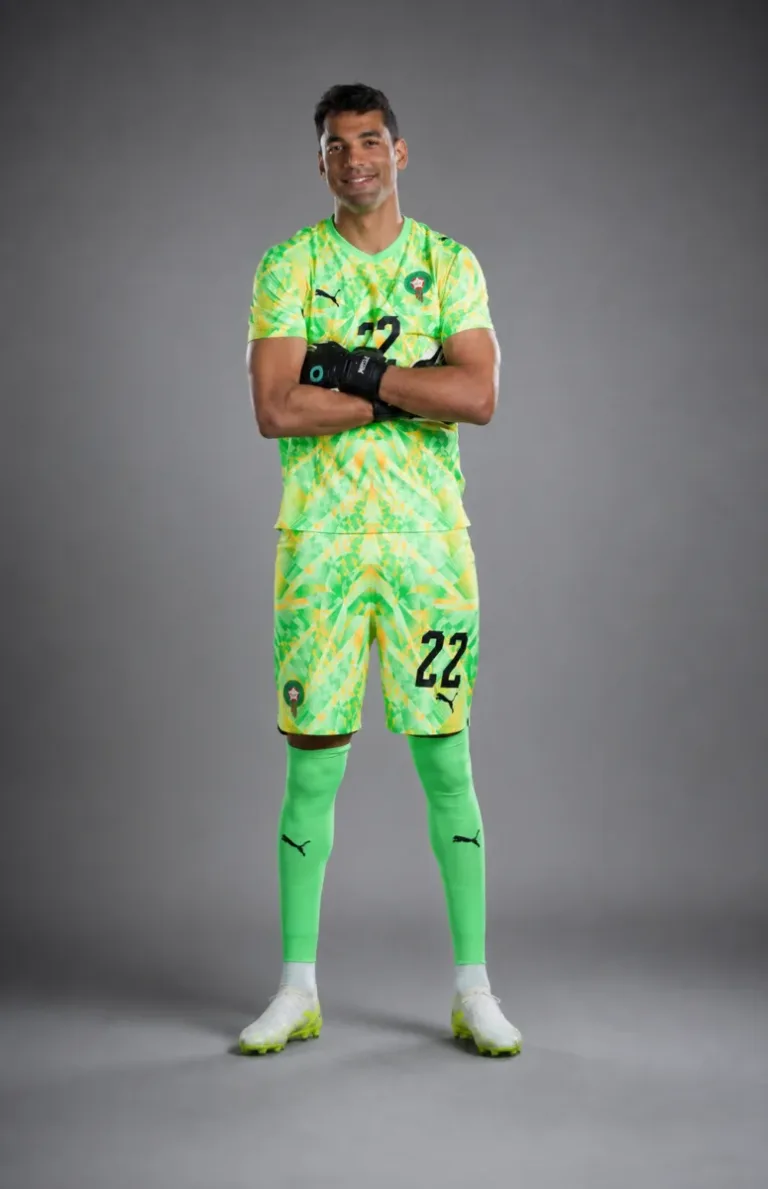
Munir Mohamedi brings experience.
A dressing room needs that. A tournament needs that. A goalkeeper group especially needs calm voices who understand preparation, pressure, and the strange loneliness of the position.
Bounou may be the guardian of the first dream.
But Munir is part of the structure behind him.
Ahmed Reda Tagnaouti completes the goalkeeper group.
He gives Morocco another option, another professional presence, another layer of readiness.
Goalkeepers can spend a tournament waiting.
But if the moment arrives, waiting must become performance instantly.
That is the job.
That is the pressure.
That is why every name matters.
So this is Morocco.
Not just one star.
Not just one memory.
A captain with speed.
A goalkeeper with calm.
A coach with a developmental mind.
Midfielders who can carry, press, and create.
Defenders who must protect the dream.
Forwards who must turn hope into goals.
And behind them, millions.
Millions who remember 2022.
Millions who believe that history was not finished.
It was only opened.
Morocco has already shown the world what belief can do.
Now the question is different.
Can belief become destiny?
Can the Atlas Lions go one step further?
Can this team carry the dream of every Moroccan and rewrite history once again?
The answer will not be written in a script.
It will be written in pressure, in sweat, in silence before penalties, in the noise after goals, and in the eyes of players who understand what they carry.
Morocco 2026.
The dream is alive.
And this time, a nation is not asking to be noticed.
It is asking to be remembered.