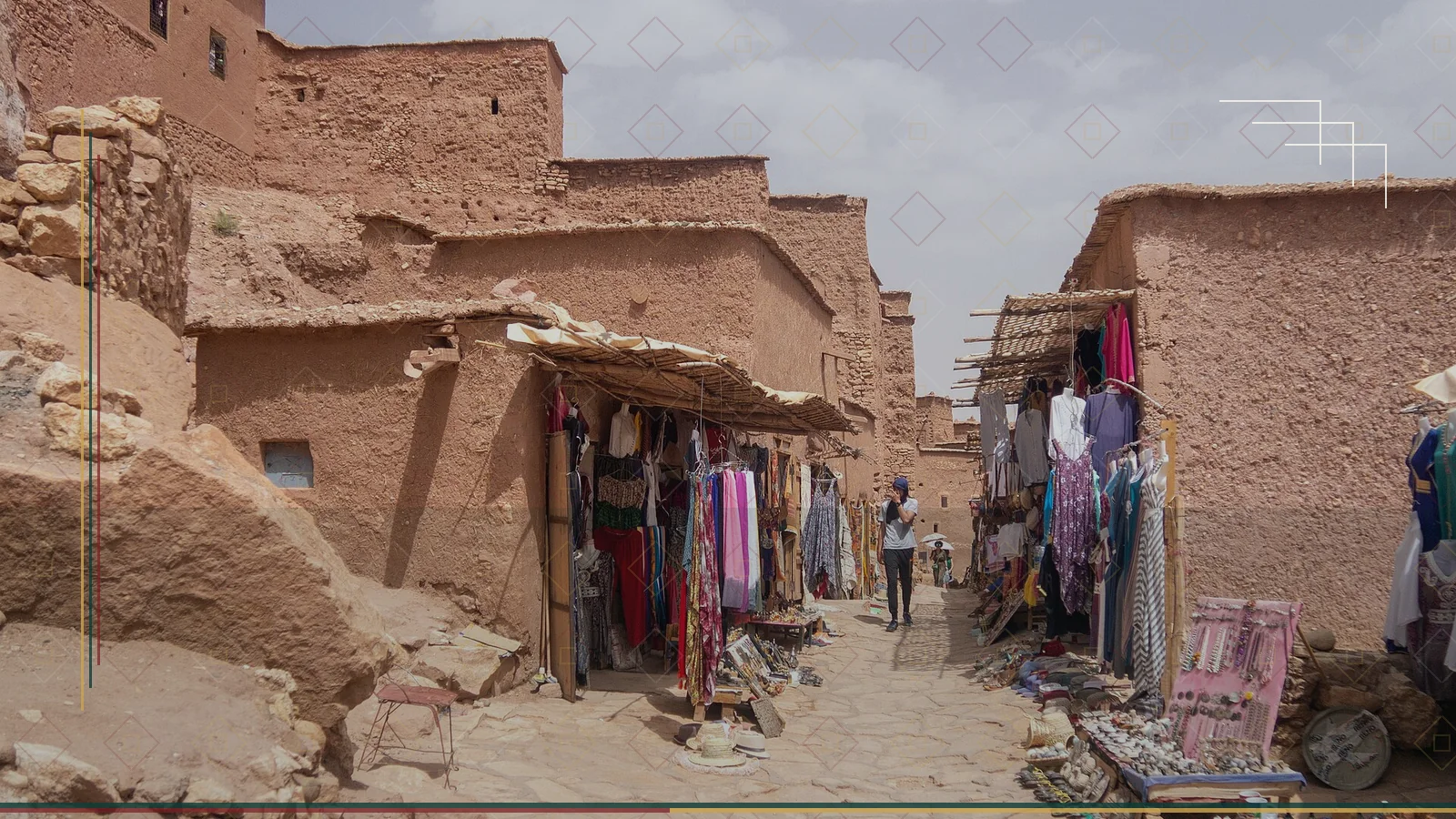
Ait Ben Haddou: Why One Ksar Still Explains Morocco’s Caravan Memory
Ait Ben Haddou stands at the meeting point of architecture, trade and memory: a fortified landscape that still explains how Morocco connected desert, mountain and city.
More than a film location.
Many people first recognise Ait Ben Haddou because it has appeared on screen. That fame is useful, but it can also flatten the place. The ksar is not important because cinema discovered it. It is important because its architecture records a way of living with landscape, defence, trade and climate.
Earth architecture carries a particular intelligence. It belongs to its environment. Its colour, mass and texture do not fight the terrain. They continue it.
The caravan logic.
Ait Ben Haddou helps explain Morocco’s historic role as a connector. Routes across mountains and desert were never abstract. They needed stops, storage, protection, negotiation and hospitality. The ksar is part of that geography of exchange.
This makes the site a bridge between local memory and global history. It reminds visitors that Morocco’s identity was shaped by movement as much as by settlement.
Preservation with responsibility.
The challenge is to protect the site without turning it into a stage set. Heritage places can be damaged by neglect, but also by excessive consumption. The best future for Ait Ben Haddou is one where restoration, local livelihoods and visitor education support each other.
A serious travel culture should make people look longer, not just take faster pictures. Ait Ben Haddou deserves that kind of attention.
Sources and editorial basis
- UNESCO World Heritage Centre – Ksar of Ait-Ben-Haddou – primary heritage source
- Visit Morocco – Official Tourism Portal – official tourism source