A Weekend in Rabat: From Almohad Ambition to Atlantic Modernism
Rabat is often described as calm, as if calm were the absence of a story. In fact, the capital is a rare urban composition: a twelfth-century imperial project, an Andalusian refuge, a planned twentieth-century administrative city and a contemporary Atlantic metropolis sharing one walkable landscape.
UNESCO listed “Rabat, Modern Capital and Historic City: a Shared Heritage” in 2012. A weekend route should honour that title by moving between periods instead of treating the medina as history and everything outside it as traffic.
Saturday: unfinished monument, living river
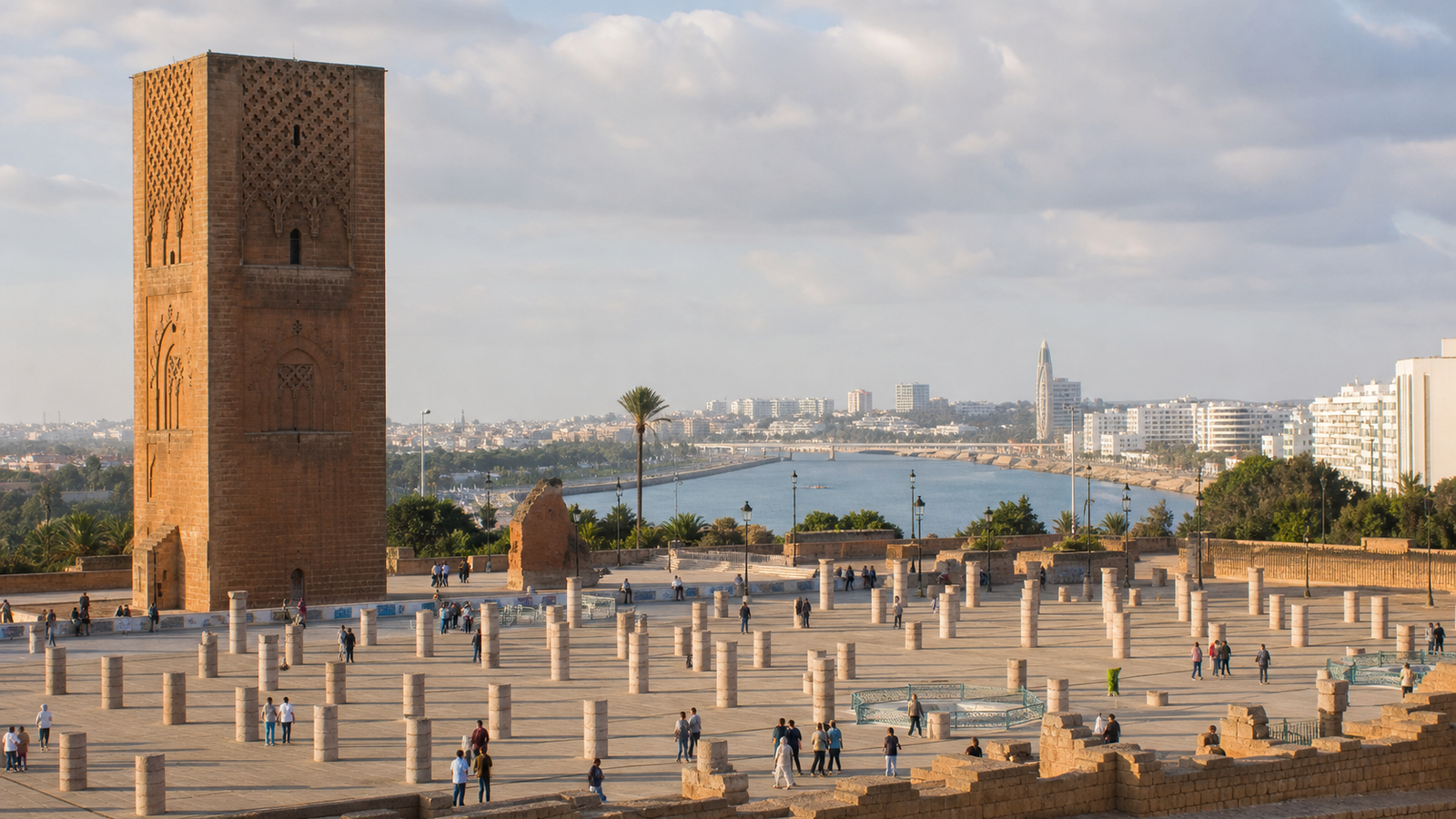
Start at the Hassan Tower and the remains of the great mosque commissioned under the Almohads. The field of columns makes an abandoned scale visible; the Mausoleum of Mohammed V introduces a very different modern craftsmanship beside it. Dress and behave respectfully in this ceremonial space.
Continue toward the Bouregreg. The river is not a boundary between Rabat and Salé so much as their shared geography. Walk the waterfront, observe the boats and cross when time allows. The view back explains the relationship between kasbah, medina, monuments and recent development better than a map.
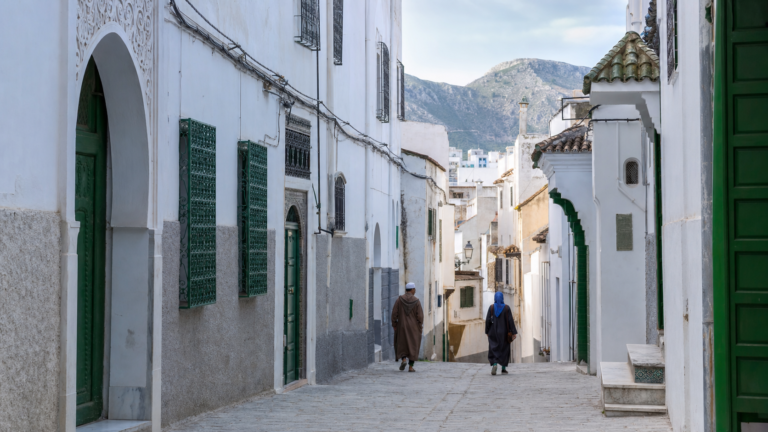
Spend late afternoon in the Kasbah of the Udayas. Its lanes are beautiful, but the kasbah is also residential. Keep voices low, avoid blocking doors and treat viewpoints as neighbourhood spaces. End at the Andalusian Garden or nearby according to opening hours, then eat in the medina or central city rather than chasing a single famous address.
Sunday: archaeology and the planned capital
Visit Chellah early. The site contains layers of ancient Sala, Islamic occupation and Marinid funerary architecture. Recent conservation and visitor arrangements may affect access, so verify before travelling.
Then walk or take the tram into the twentieth-century city. Avenue Mohammed V, public buildings, apartment façades and gardens express the protectorate-era plan that UNESCO includes in the world-heritage property. Reading this architecture critically does not require celebrating colonial rule; it requires understanding how power shaped streets that Moroccans subsequently made their own.
Reserve the afternoon for a museum—modern art, archaeology or history depending on current programmes—and for ordinary public life around cafés and the tram. Rabat’s strongest contemporary quality is the way culture and administration sit within a functioning city rather than a sealed resort zone.
Move like a resident
- The tram is useful for linking central Rabat, the river and Salé.
- Distances can look short but Atlantic sun and wind change the walk; carry water.
- Check official opening hours for Chellah, museums and gardens.
- Photograph architecture freely from public space, but ask before including identifiable residents.
Rabat is not a city to “do” between Casablanca and Fez. It is a lesson in how Morocco repeatedly rebuilt the idea of a capital—without erasing every earlier draft.
Sources and further reading