Agadir Beyond the Beach: A Road into the Souss
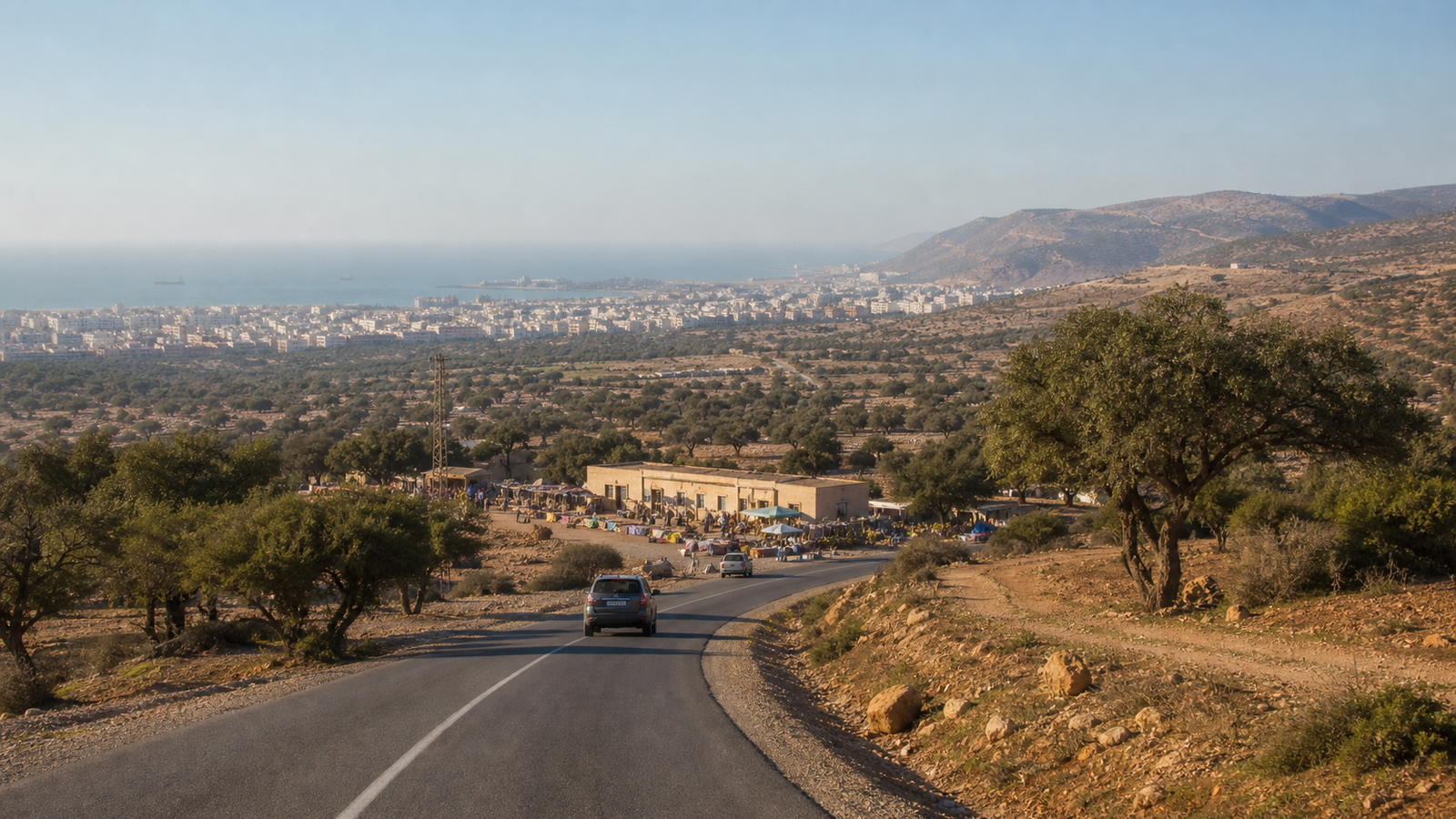
Agadir is easiest to misunderstand from a hotel balcony. The bay is broad, the promenade works and the sunset earns its audience. Yet the city’s real depth appears when you connect the rebuilt centre to the farms, argan landscapes, fishing towns and mountain routes of the Souss.
Begin with the city that rebuilt itself
The earthquake of 1960 destroyed much of Agadir and killed thousands. The modern city that followed was not an absence of heritage but a national reconstruction project. Seek out its civic buildings, concrete forms and urban plan. Architecture from the 1960s deserves the same attentive looking that visitors bring to an old medina.
Agadir Oufella, above the bay, carries the memory of the earlier city and the disaster. Visit respectfully, follow current access rules and understand the site as both viewpoint and place of mourning.
Read the Souss through its products
South and east of the city, irrigated agriculture and packing stations connect citrus and vegetables to export markets. Argan trees support oil production and a web of ecological and social knowledge. A credible cooperative visit should explain the tree, harvest, processing, quality and the share that reaches workers—not only stage a sales stop.
At markets, seasonality tells the regional story. Ask before photographing vendors, agree prices clearly and remember that a working souk is not an attraction designed around visitors.
Choose one road, not five pins
North: the coast toward Taghazout and beyond offers surf culture, beaches and rapidly changing development. Look past the resorts to water use, village life and access to the shore.
South: Souss-Massa National Park and the coast toward Tiznit combine wetlands, cliffs, biodiversity and urban craft traditions. Use authorised routes and guides where conservation requires them.
East and south-east: roads toward Taroudant and the Anti-Atlas move through agricultural plains into mountain landscapes. Travel times are slower than the distance suggests; that slowness is part of the experience.
A responsible two-day extension
On day one, give the morning to Agadir’s rebuilt history and market, then visit a verified argan cooperative or producer with transparent practices. On day two, choose either the national-park coast, Taroudant or a northern surf route. Trying to combine all three turns the Souss into a windscreen.
Carry water, but avoid unnecessary single-use plastic. Do not drive unmarked tracks in protected environments. Confirm weather and road conditions, particularly after heavy rain. When buying argan oil, look for traceability, proper packaging and a use-by date rather than judging quality by a rustic shop display.
Agadir beyond the beach is not a hidden Morocco opposed to the modern city. It is the system that makes the city intelligible: reconstruction, migration, agriculture, ocean, mountains and trade meeting in one region.
Sources and further reading