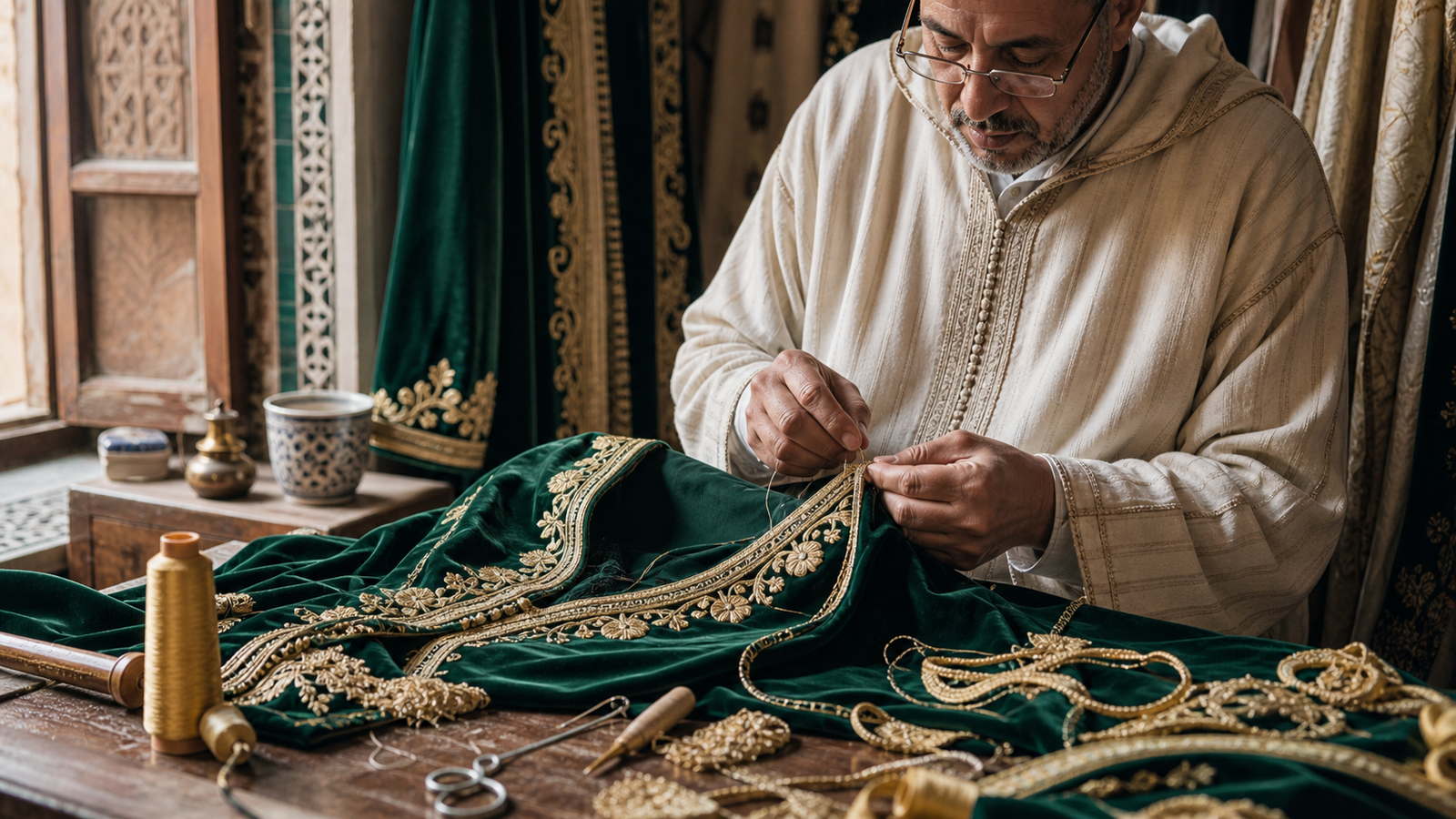
The Moroccan Caftan Is Not One Garment but an Entire Workshop
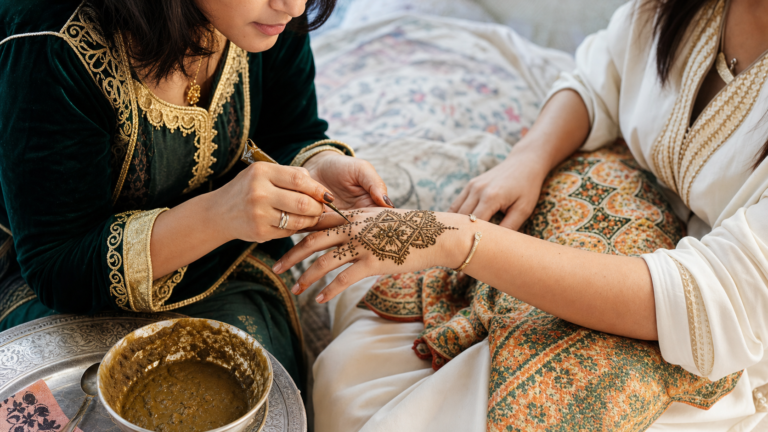
A Moroccan caftan can enter a room in one movement. It takes a workshop to make that movement possible. Behind the finished silhouette is a chain of specialised knowledge: choosing the fabric, drawing the cut, constructing the lining, preparing decorative braid, tying buttons, embroidering, beading and fitting the garment to a particular body.
In 2025, UNESCO inscribed the Moroccan caftan—its art, traditions and skills—on the Representative List of the Intangible Cultural Heritage of Humanity. The inscription recognises something fashion photography often hides: this heritage lives in relationships between craftspeople, clients, families and new generations.
A garment with a changing history
The caftan has absorbed courtly, urban, Andalusian, Amazigh, Jewish-Moroccan and wider Mediterranean influences over centuries. There is no honest single-origin slogan that captures that history. Moroccan makers have continually translated outside materials and local techniques into a recognisable visual language.
That language is not frozen. Sleeves narrow or widen; fabrics move from brocade and velvet to lighter contemporary textiles; colours shift; embroidery becomes dense or deliberately spare. Innovation succeeds when it understands proportion, construction and occasion.
The details are structural
Sfifa, the decorative braid that defines edges and openings, is not simply applied decoration. It organises the garment’s lines. Aâkad, the hand-worked buttons and loops, make closure part of the design. Embroidery traditions vary by city and workshop, while skilled cutting determines how apparently heavy materials move gracefully.
These components may pass through several hands. A caftan can therefore be signed by one designer yet embody a network of often less visible specialists. Preserving the craft means making that labour visible and economically viable.
How to recognise quality
- The motif aligns across seams and respects the body’s scale.
- Braid and buttons are even, secure and comfortable in movement.
- The lining supports the outer fabric without pulling it out of shape.
- Embroidery is clean on the reverse as well as the front.
- The garment can be altered and repaired rather than treated as disposable.
Heritage survives by being used
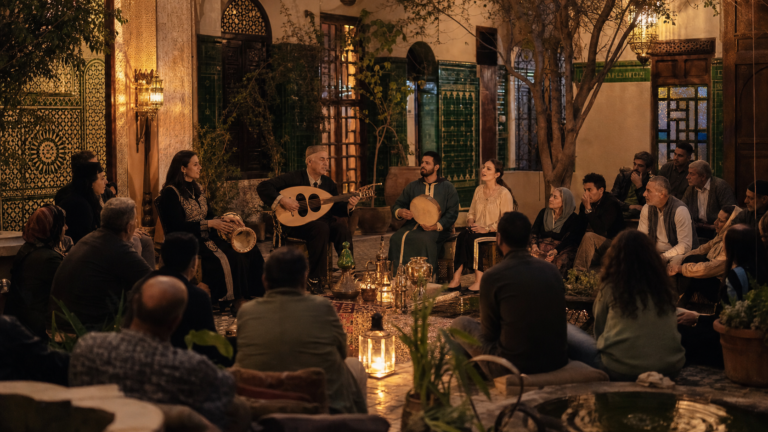
The caftan remains present at weddings, religious celebrations, family ceremonies, public events and contemporary fashion presentations. That living demand distinguishes intangible heritage from a museum costume. Apprentices learn through observation and repetition; clients pass vocabulary and preferences between generations; makers adapt their work to new lives.
The danger is not change itself. It is the loss of time, credit and transmission: machine imitation sold as handwork, designs detached from their makers, and prices that cannot sustain the hours required for mastery.
To wear a Moroccan caftan well is to appreciate more than a beautiful surface. It is to recognise the entire workshop walking into the room.
Sources and further reading