Henna in Morocco: The Meaning Behind the Pattern
A henna pattern is temporary. The occasion it marks can remain in a family’s memory for decades. In Morocco, henna accompanies weddings, births, religious celebrations and moments of transition. It can express joy, beauty, blessing and protection, but its meaning does not sit in one universal symbol chart. Context gives the pattern its force.
In 2024, “Henna: rituals, aesthetic and social practices” was added to UNESCO’s Representative List through a multinational nomination that includes Morocco. The recognition treats henna not merely as decoration but as knowledge linking cultivation, preparation, artistry, ritual and social gathering.
From leaf to paste
Natural henna comes from the powdered leaves of Lawsonia inermis. Mixed into a paste and allowed to release its dye, it stains the outer layers of skin from orange to deep reddish brown. Preparation varies by practitioner and occasion.
That distinction matters in a market filled with fast, very dark products. So-called “black henna” may contain additives such as para-phenylenediamine, which can cause serious skin reactions. A striking colour is not evidence of authenticity or safety.
The ceremony is larger than the design
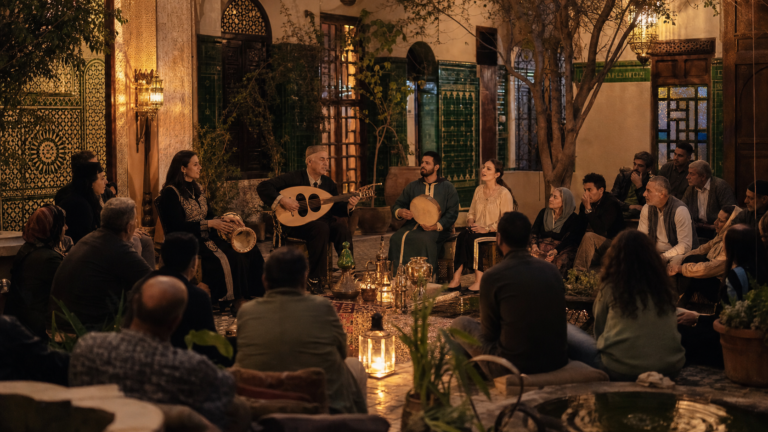
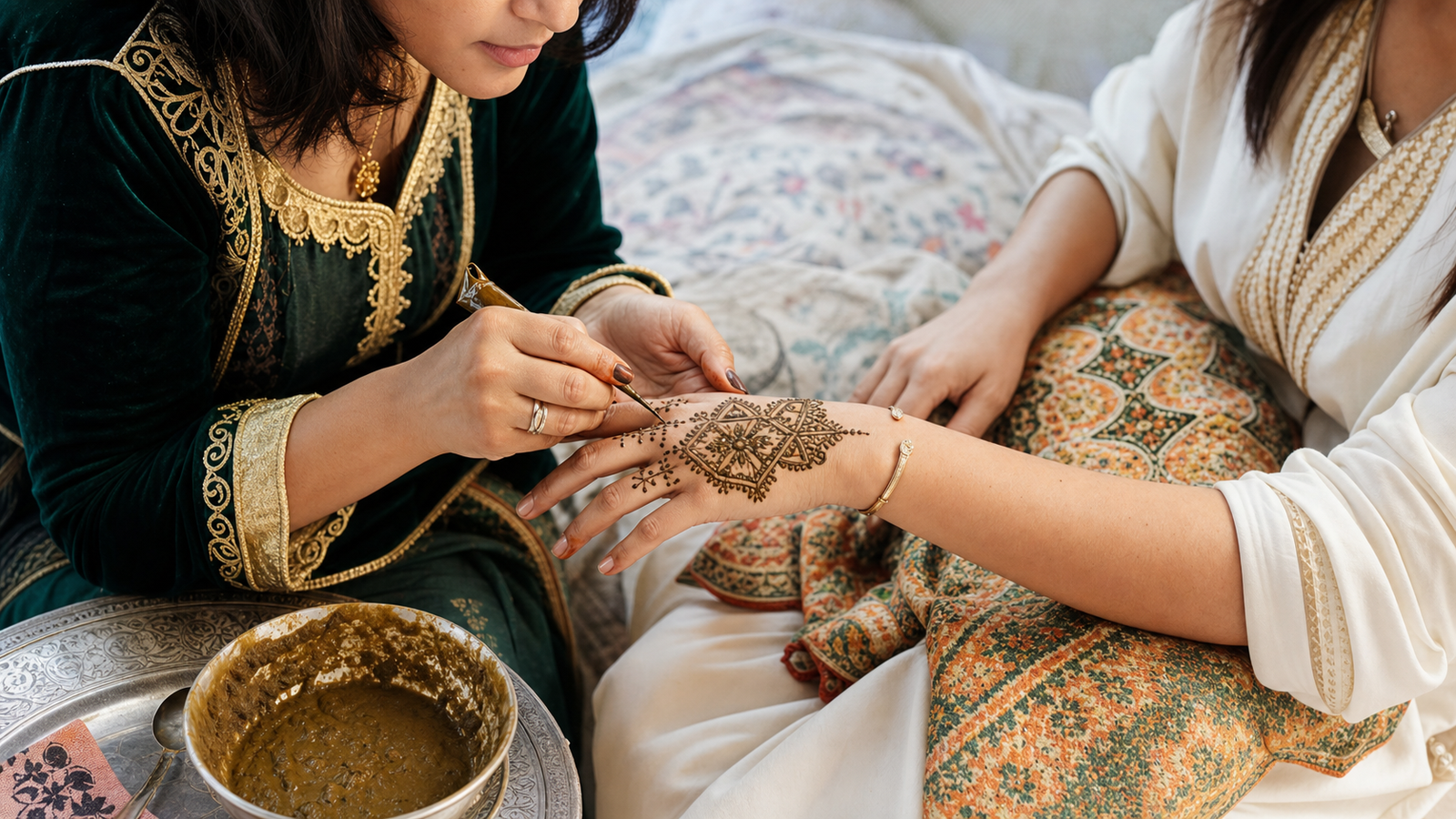
At a wedding, a henna evening can gather women across generations around music, food, advice and anticipation. The artist’s work becomes part of a social choreography. Hands are held, watched and discussed. Patterns may draw from floral, geometric or regional vocabularies, but artists also develop personal styles.
The craft depends on controlled pressure, confident lines and an understanding of how a design follows the hand or foot. Speed comes after years of repetition. Good work appears effortless because the technique has become embodied.
What visitors should understand
- Ask what is in the paste and avoid products marketed as instant black henna.
- Do not assume every motif has one fixed ancient meaning.
- Request permission before photographing a private ceremony or a child.
- Pay for the artist’s time and skill rather than treating the work as a souvenir extra.
A living language, not a frozen code
Contemporary artists share designs online, work with new applicators and serve clients across the Moroccan diaspora. Change can widen the craft’s audience. It can also flatten regional difference when copied images circulate without context or credit.
The most respectful question is not “What does this exact triangle always mean?” It is “Who made this, for whom, on what occasion, and what did the act of making create between them?” Henna’s deepest pattern is social.
Sources and further reading