Morocco Real Estate in 2026: What the Official Numbers Actually Say
The most important Moroccan property number in early 2026 was not a price increase. It was a fall in activity. According to the official real-estate price index published by Bank Al-Maghrib and the National Agency for Land Conservation, Cadastre and Cartography, prices declined 2.4% from the previous quarter and 0.4% over a year in the first quarter of 2026. Residential prices fell 3% quarter on quarter. The number of transactions dropped 40.2% from the previous quarter and 9.3% from a year earlier.
Those figures do not prove that every apartment in Morocco lost the same value. They show something more useful: the national market entered 2026 with weaker liquidity and strong reasons to negotiate carefully.
A price index is not a listing portal
Asking prices advertise hope. Registered transactions record deals that actually closed. The official index follows completed property transactions across residential, land and professional assets. It is therefore a stronger starting point than a social-media claim about “guaranteed” appreciation.
It is still an aggregate. A renovated apartment near a tram stop, an off-plan coastal unit and an ageing building without clear co-ownership records belong to different markets. City, street, title, condition and exit demand can outweigh the national direction.
Why lower transaction volume matters
A market can display modest price movement while becoming harder to sell into. Falling transaction numbers may indicate a gap between sellers’ expectations and buyers’ budgets, tighter financing, delayed decisions or a shortage of suitable stock. For an investor, liquidity affects the exit plan: how long a property may sit, what discount a quick sale could require and whether rental income can carry the asset.
The five checks before calculating yield
- Verify the title. Obtain the land-title information and check ownership, charges, easements and surface area with the competent professionals.
- Compare closed evidence. Use official reference tools and local transaction evidence instead of relying on one agent’s advertised comparables.
- Model the full cost. Add taxes, notary and registration expenses, agency fees, financing, furnishing, maintenance, vacancy and building charges.
- Test the tenant story. A university district, family neighborhood, tourism zone and office corridor require different assumptions. Short-term occupancy should never be treated as automatic.
- Plan the exit. Identify the likely next buyer and the realistic selling period before signing.
City narratives need street-level proof
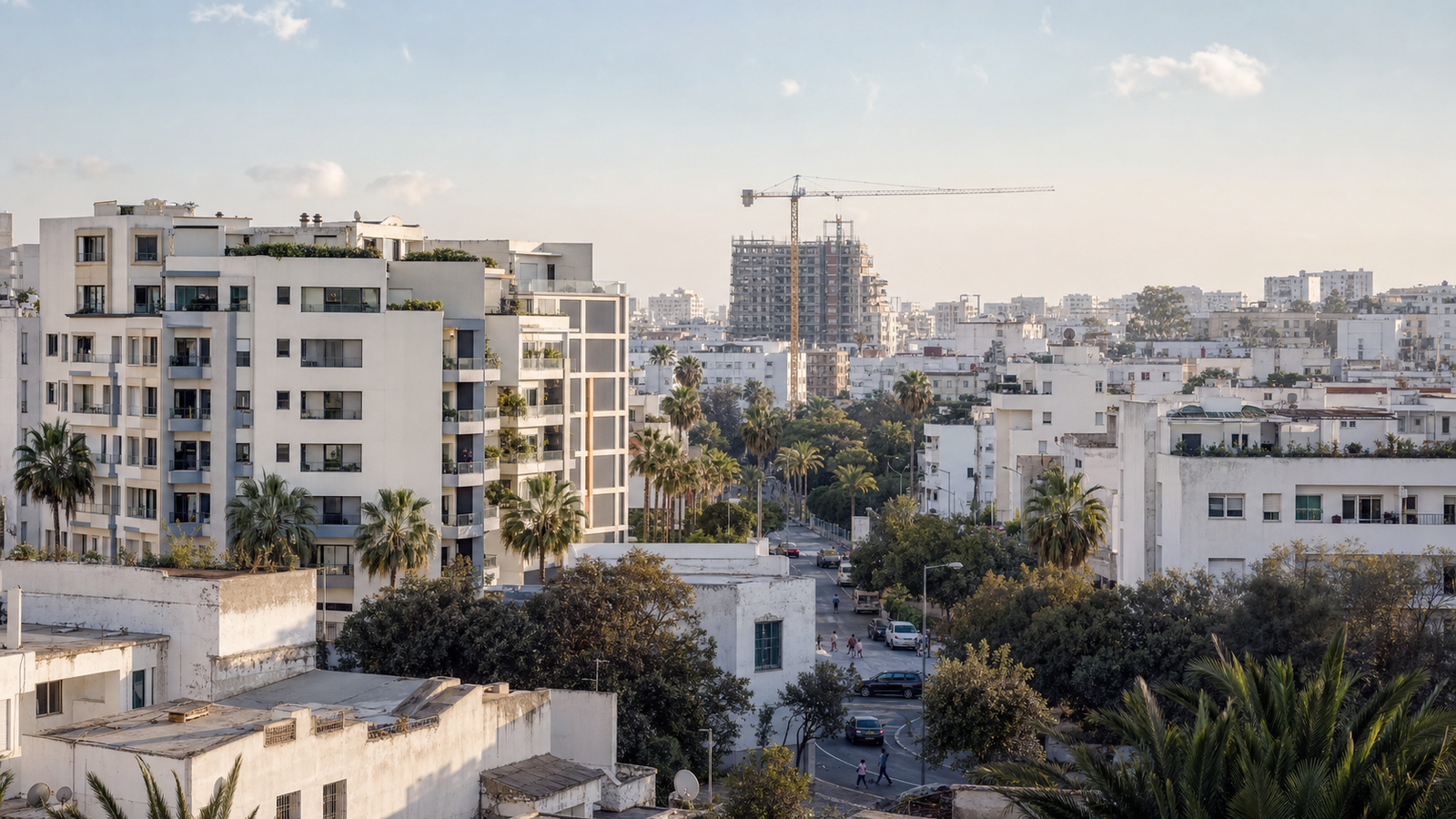
Casablanca offers depth of employment and demand but wide differences between districts. Rabat benefits from institutional stability and constrained premium locations. Tangier’s industrial growth creates housing demand, yet distance from employment zones is decisive. Marrakech can produce strong visitor revenue but faces seasonality and intense micro-market variation. Agadir combines local and tourism demand while reconstruction, new supply and location reshape comparisons.
For Moroccans living abroad, familiarity is not due diligence. A family connection can help inspect a property, but it does not replace an independent legal review, a measured survey, a rental-market test and written documentation.
What the 2026 data really permits us to say
The first-quarter figures support caution, not panic. Softer prices and fewer transactions may create room for disciplined buyers, especially those who are not forced to close quickly. They also punish weak assets that were purchased only because “Morocco is growing.” Growth can lift a city while a badly titled, badly located or badly managed unit underperforms.
This article provides market context, not personalized financial, legal or tax advice.
Sources and further reading