Morocco’s Renewable-Energy Opportunity: Grid Capacity Is the Real Story
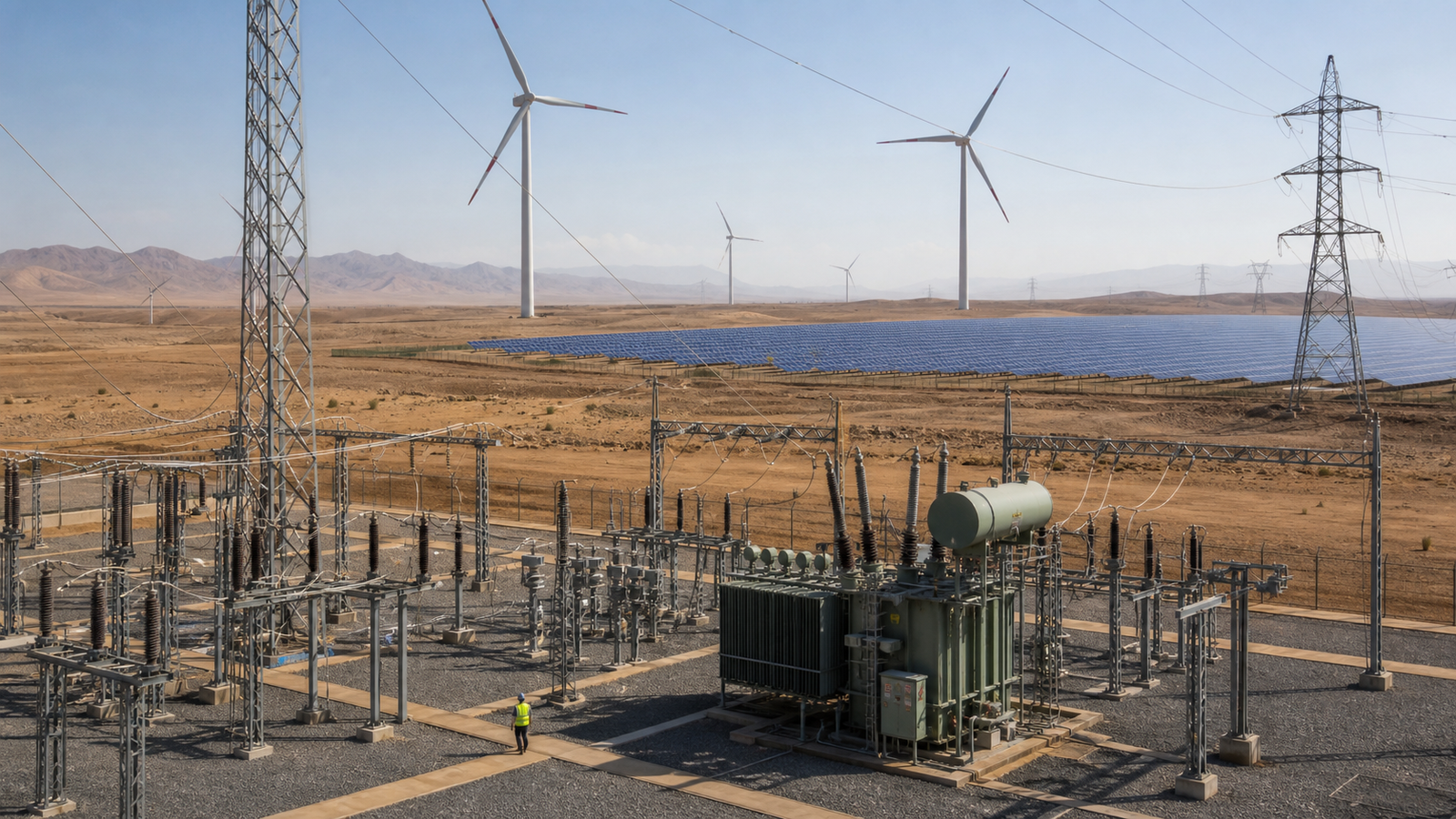
Morocco’s next renewable-energy story will be photographed with turbines and solar panels. It will be decided in substations. The country’s strategy targets a 52% share of renewables in installed electricity capacity by 2030. Reaching that ambition requires more than building generation: it requires a grid able to host, move and balance it.
In January 2026, the National Electricity Regulatory Authority published the grid’s hosting capacity for 2026–2030. The trajectory reaches 10,429 MW by 2030. Hosting capacity is the practical bridge between an attractive resource and a connectable project. If the grid cannot accept power in a location and year, a beautiful site is not yet an investment case.
Read the grid before buying the land
Renewable developers typically begin with irradiation or wind data. They should begin just as early with the connection point, available capacity, reinforcement schedule, losses, curtailment risk and the allocation process. A cheaper parcel can become expensive if it requires long transmission works or waits years for capacity.
The opportunity is wider than generation
Grid expansion creates demand for engineering, transformers, switchgear, cables, forecasting, cybersecurity, inspection and maintenance. Variable solar and wind output increases the value of flexibility: storage, demand response, stronger interconnections and industrial loads able to adapt their consumption.
Industrial decarbonisation is another layer. Exporters facing customer or regulatory carbon requirements may seek cleaner power, efficiency systems and verifiable energy data. The strongest service companies will connect technical performance to auditable evidence.
Four constraints belong in the base case
- Connection timing. A project schedule must match published and confirmed network capacity.
- Water and land. Cleaning, construction and certain technologies have local impacts; community and ecological context cannot be treated as an afterthought.
- Revenue design. Developers must understand the buyer, contract, price exposure and settlement rules—not just annual output.
- Supply-chain resilience. Currency, imported equipment, spare parts and specialised technicians affect lifetime cost.
Green hydrogen raises the standard of proof
Morocco’s solar and wind resources support serious interest in hydrogen and derivative products. Yet these projects multiply the need for electricity, water, ports, offtake agreements and capital. Announced scale should never be confused with financed, permitted and connected capacity. Credible analysis separates memorandum, award, financial close, construction and operation.
The investable story is an operating system
Morocco has a strategic location, industrial demand and strong renewable resources. The opportunity is real. So is the work between resource and revenue. Investors who understand the grid, the regulator, the industrial customer and the local territory will see a richer market than a simple race to install megawatts.
The winning image may still contain a solar field. The winning model will contain the substation, the queue, the contract and the contingency plan.
Sources and further reading